

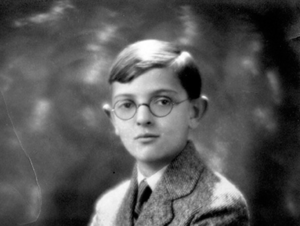
In Their Own Words
Humour
“The strategist is often like a man who, having found a way to make a fire by rubbing two sticks together, forgets that the purpose was to get warm and instead spends all his time looking for better sticks.”
Rapoport was known for a very dry, professorial wit. He often used humour to criticize the military-industrial complex. One of his more biting observations of military logic was the above quote. He viewed humour not just as entertainment, but as a sophisticated cognitive tool and a necessary survival mechanism for a sane society. He used humour as a bridge to understand human psychology and the absurdity of logic.
Professional Activities
Anatol Rapoport was a distinguished polymath whose career bridged the arts and sciences. Initially a concert pianist educated in Vienna, he later pivoted to mathematics and social sciences, earning his PhD from the University of Chicago. This musical background deeply informed his scientific outlook, fostering a lifelong fascination with pattern recognition and complex systems.
Rapoport became a central figure in Game Theory, most notably for championing the “Tit-for-Tat” strategy. This simple approach proved that cooperation could be more effective than aggression in the Iterated Prisoner’s Dilemma, providing a mathematical basis for altruism. His academic career spanned the University of Chicago, the University of Michigan, and the University of Toronto, where he held professorships in psychology and mathematics while focusing on the modeling of social behaviour.
A committed pacifist, Rapoport utilized systems science to critique nuclear strategy and the Cold War’s rationality. He was a leading voice in the anti-war movement, authoring seminal works like Fights, Games, and Debates to advocate for disarmament. Ultimately, his legacy lies in his effort to replace power-oriented paradigms with empathy-oriented systems, using quantitative analysis to address humanistic problems and foster global conflict resolution.
Contributions To Canada’s Systems Thinking Literacy
- Pioneering peace research: After joining the University of Toronto in 1970, he established Canada as a premier global hub for the mathematical study of peace, conflict resolution, and social responsibility.
- Interdisciplinary leadership: As a co-founder of the International Society for the Systems Sciences, he successfully integrated biology, mathematics, and philosophy to promote wholistic thinking within Canadian academic institutions.
- Bridging academic silos: He played a crucial role in merging the “two cultures,” teaching scholars how to apply rigorous quantitative models to understand complex, qualitative human behaviours.
- Advocating for ethics: Rapoport significantly enhanced national systems literacy by championing human-centered frameworks. He argued that systemic design should prioritize ethical outcomes and empathy over mere technical efficiency, ensuring that mathematical precision serves the goal of human survival.
Contributions To Canadian K-12 Education
Anatol Rapoport’s influence on Canadian K-12 education was primarily indirect, shaping the philosophical and pedagogical frameworks of modern curricula through the following contributions:
- Wholistic pedagogy: By championing General Systems Theory, Rapoport fostered an intellectual shift toward interdisciplinary learning. This helped transition Canadian schooling from isolated subjects toward integrated models that emphasize whole systems thinking in science and geography.
- Conflict resolution: His work in game theory—specifically the Tit-for-Tat strategy—provided the theoretical foundation for peer-mediation and social-emotional learning (SEL) programs. These frameworks teach students that cooperation is a more sustainable strategy than aggression.
- Ethical science: Rapoport’s insistence on social responsibility influenced the Science, Technology, Society, and Environment (STSE) curriculum. This ensures students evaluate the ethical and social impacts of technology rather than just technical mechanics.
- Systems literacy: He promoted quantitative literacy, encouraging the use of mathematics to model social issues. This approach is now reflected in Canadian social studies, where data analysis is used to understand human behavior and global challenges.
- Mentorship: Through his tenure at the University of Toronto, he influenced a generation of Canadian educators who integrated his focus on empathy, ethics, and wholistic logic into provincial teaching standards and teacher training.
Contributions To The Global Systems Thinking Discipline
Anatol Rapoport was a visionary thinker who fundamentally reshaped systems science by grounding it in humanistic values. In 1954, he co-founded the Society for General Systems Research alongside Ludwig von Bertalanffy and Kenneth Boulding, a pivotal move that established systems theory as a formal academic discipline. His early mathematical explorations into stochastic and biased networks provided the foundational framework for modern Social Network Analysis, proving how information propagates through large populations.
Rapoport is perhaps most famous for his “Tit-for-Tat” strategy in Game Theory. By demonstrating mathematically that cooperative systems are more stable and sustainable than aggressive ones, he provided a rigorous scientific basis for altruism. This insight bridged biology and social science, suggesting that cooperation is not just a moral choice, but a superior survival strategy.
Furthering his systemic study of human interaction, Rapoport classified conflict into three distinct types: Fights (instinctive), Games (strategic), and Debates (persuasive). He argued that for humanity to survive the nuclear age, it must evolve its systems of conflict away from calculated aggression and toward empathic debate.
Rapoport’s legacy was the transformation of systems science into a powerful tool for peace research. He utilized quantitative analysis to critique military command and control thinking and advocate for disarmament. By proving that cooperation is mathematically superior to aggression, Rapoport used the precision of mathematics to champion the most essential human values: understanding, empathy, and global peace.
Individual Learning and Projects
Apart from the first appearance of the word Cybernetics in a book title in the late 1940’s, it wasn’t until the late 1960’s that publicly available books included the term Systems Thinking or Systems Science in the title. For the first wave of pioneers, beyond thought engagements with the authors in their Personal Learning Sources, Learner Activities were predominantly via living engagements with other people, in organised academia or independent scholars. This included 1) people studying General Systems Theory, 2) people working in the pioneer’s primary discipline, 3) people from other disciplines building interdisciplinary systems thinking skills, and 4) people wanting to stay in tune with the growing Systems Thinking community taking shape.
This text uses the word engagement to mean “active involvement and interest”. The term living engagements here includes spoken conversations with another person or group of people and written conversations in academic or professional organisation publications. The living engagement may have been supportive or disputational in nature.
The Projects of these pioneers could include teaching undergraduate university students, teaching and conducting research with graduate/post-graduate university students, or conducting research in learning institutes/foundations. Projects for most of them involved building information sharing networks enabling the interdisciplinary communication to happen, and several worked in diverse business, government and non-government organizations. Some pioneers chose to work as much as possible outside formal academia to conduct highly impacting projects as independent scholars.
Anchoring themselves in stable spousal relationships and home life enabled each pioneer to sustain day-to-day wellbeing as they evolved their systems thinking skills over many decades. As lifelong learners they remained exceptionally productive whether in or outside formal academia for most of their lives.
The learner activities and projects listed below are intended as starting points for deeper dives into the full network of people with whom they engaged and the projects they conducted.
Learner Activities
With whom did Anatol engage more frequently in the Systems Thinking community?
Kenneth Boulding, Ralph Waldo Gerard, James Grier Miller
With whom did Anatol engage more frequently from his discipline?
Albert Chammah, Melvin Dresher, Meyer A. Zinnes, William H. Riker
With whom did Anatol engage more frequently from other disciplines?
Samuel Ichiye Hayakawa, Kenneth Boulding
What role did Anatol’s spouse play in his engagements?
Gwen Rapoport (nee Goodrich) had a strong background in political organizing, cooperative movements, and administration. She regularly assisted in managing the practical and logistical machinery of the societies, committees, and publications Anatol was involved in. She acted as a hostess and community builder, creating the intellectual and social environment that allowed scholars from diverse disciplines (mathematics, biology, economics, psychology) to connect and collaborate. Their home became an informal salon where visiting mathematicians, psychologists, game theorists, and biologists gathered to debate ideas outside the formal classroom or laboratory. Colleagues noted that conversations with Gwen often encouraged researchers around Anatol to consider the human, social, and ethical consequences of abstract mathematical models, particularly in game theory and conflict research. Gwen also assisted with the administrative logistics of Anatol’s communications, international travel schedules, and academic obligations. She often handled the practical side of academic output such as typing, copyediting, proofreading, and organizing his journal articles, book drafts, and peer reviews.
Projects
Science and the Goals of Man (1950)
Operational Philosophy (1953)
Fights, Games, and Debates (1960)
Strategy and Conscience (1964)
Prisoner’s Dilemma (1965)
General System Theory: Essential Concepts and Applications (1986)
AI generated and reviewed with multiple brands