

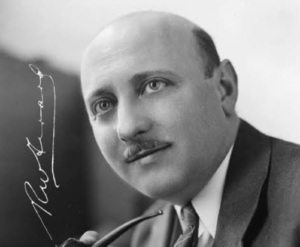
In Their Own Words
Humour
“There can be no twisted thought without a twisted molecule.”
He used this witty, line-item summary to poke fun at purely psychoanalytic approaches to mental illness, driving home his belief that every psychological event or mental disorder has an underlying biochemical and physical reality in the brain. Another playful observation he often made about academia and scientific debate was: “A scientist is a person who would rather be wrong than quiet. “A scientist is a person who would rather be wrong than quiet.” Gerard loved using humor and memorable single-liners to challenge dogmatic thinking and keep intellectual debates lively. He viewed humor not merely as a pleasant social distraction, but as a vital biological mechanism and an essential cognitive tool for intellectual flexibility. He saw human emotions—including humor and laughter—through an evolutionary and biological lens arguing that laughter served as a homeostatic mechanism for the brain. In systems thinking, he saw humor as proof of the brain’s unique capacity for dynamic re-framing. A person who lacks a sense of humor, in Gerard’s view, was suffering from a kind of dynamic rigidity—an inability to shift mental models fluidly. humor was ultimately a marker of high-level mental health and intellectual humility: it was the brain’s way of staying open to the unexpected.
Professional Activities
Gerard’s professional activities centered on research, teaching, academic leadership, and scientific service. As a neurophysiologist and behavioral scientist, he conducted influential work on nerve conduction, brain and nerve metabolism, learning and memory, and the effects of drugs on the nervous system. He was also associated with the early development of intracellular microelectrode recording, a technique that became important in neuroscience. In addition, Gerard was an early advocate for viewing schizophrenia as a disorder with chemical and biological foundations.
Gerard spent much of his career as a professor, teaching at the University of Chicago, the University of Illinois, the University of Michigan, and later the University of California, Irvine. At UC Irvine, he helped organize the new campus and served as the first Dean of the Graduate Division.
He was also deeply involved in building institutions and research programs. At the University of Michigan, he helped establish the Mental Health Research Institute, which became a major center for behavioral and psychiatric research. In professional organizations, he served as president of the American Physiological Society in 1951–52 and played a role in the early efforts that led to the founding of the Society for Neuroscience, where he later served as Honorary President. He also wrote extensively, producing roughly 500 papers and nine books
Contributions To Canada’s Systems Thinking Literacy
Ralph contributed to Canada’s systems thinking literacy primarily indirectly through foundational institutions, collaborations, and concepts:
- Co-founding the SGSR: In 1954, Gerard co-founded the Society for General Systems Research (SGSR), establishing the global framework and literature that Canadian educators later used to build systems thinking curricula.
- Influence via Anatol Rapoport: Gerard worked closely with Rapoport (an SGSR co-founder), who moved to the University of Toronto in 1970 and embedded general systems theory into Canadian academia, peace research, and social science.
- Supporting Canadian academics: By legitimizing systems science in North America, Gerard helped pave the way for co-founder Ludwig von Bertalanffy to advance systems thinking while Bertalanffy was working at the Universities of Ottawa and Alberta.
- Providing core frameworks: Gerard’s concepts of dynamic regulation and hierarchical “orgs” influenced interdisciplinary Canadian research in complex fields like ecology, environmental policy, and management science.
Contributions To Canadian K-12 Education
Gerard made no direct contributions to Canada’s K-12 education system, but his role in establishing General Systems Theory (GST) shaped it indirectly:
- Foundation for Integrated Curricula: Gerard’s push for interdisciplinary systems thinking influenced Canadian provincial ministries of education to adopt holistic, cross-curricular learning frameworks rather than isolated subject silos.
- K-12 Science and Ecology Standards: His core concepts—such as feedback loops, self-regulation, and hierarchical systems (“orgs”)—gradually filtered into Canadian K-12 science programs, particularly in environmental science and ecology modules.
- Influence on Teacher Education: Through his SGSR co-founders who worked at Canadian universities (such as Anatol Rapoport and Ludwig von Bertalanffy), systems concepts entered Canadian higher education, indirectly shaping how faculties of education trained teachers to instruct complex problem-solving.
Contributions To The Global Systems Thinking Discipline
Ralph Waldo Gerard made foundational contributions to the global systems thinking discipline, most notably as a co-founder of the Society for General Systems Research (SGSR) in 1954 alongside Ludwig von Bertalanffy, Anatol Rapoport, and Kenneth Boulding. This organization helped formalize general systems theory as an international, interdisciplinary field dedicated to understanding complex systems across biology, psychology, economics, and sociology.
As a neurophysiologist, Gerard championed an integrative approach to living systems. He conceptualized biological and social phenomena as hierarchical, self-regulating structures, coining terms like “orgs” to describe systems at varying levels of organization from cells and organs to individuals and whole societies. His work emphasized feedback, regulation, and the dynamic interactions between biological components and mental processes, helping move science beyond simple reductionism.
Gerard was also an active participant in the influential Macy Conferences on Cybernetics (1946–1953), where he helped bridge physiology, information theory, computing, and behavioral science. By connecting neuroscience to cross-disciplinary systems concepts and institutionalizing the field through the SGSR, Gerard played a vital role in establishing systems theory as a recognized global discipline.
Individual Learning and Projects
Apart from the first appearance of the word Cybernetics in a book title in the late 1940’s, it wasn’t until the late 1960’s that publicly available books included the term Systems Thinking or Systems Science in the title. For the first wave of pioneers, beyond thought engagements with the authors in their Personal Learning Sources, Learner Activities were predominantly via living engagements with other people, in organised academia or independent scholars. This included 1) people studying General Systems Theory, 2) people working in the pioneer’s primary discipline, 3) people from other disciplines building interdisciplinary systems thinking skills, and 4) people wanting to stay in tune with the growing Systems Thinking community taking shape.
This text uses the word engagement to mean “active involvement and interest”. The term living engagements here includes spoken conversations with another person or group of people and written conversations in academic or professional organisation publications. The living engagement may have been supportive or disputational in nature.
The Projects of these pioneers could include teaching undergraduate university students, teaching and conducting research with graduate/post-graduate university students, or conducting research in learning institutes/foundations. Projects for most of them involved building information sharing networks enabling the interdisciplinary communication to happen, and several worked in diverse business, government and non-government organizations. Some pioneers chose to work as much as possible outside formal academia to conduct highly impacting projects as independent scholars.
Anchoring themselves in stable spousal relationships and home life enabled each pioneer to sustain day-to-day wellbeing as they evolved their systems thinking skills over many decades. As lifelong learners they remained exceptionally productive whether in or outside formal academia for most of their lives.
The learner activities and projects listed below are intended as starting points for deeper dives into the full network of people with whom they engaged and the projects they conducted.
Learner Activities
With whom did Ralph engage more frequently in the Systems Thinking community?
Ludwig von Bertalanffy, Anatol Rapoport, and Kenneth Boulding, Warren McCullough
With whom did Ralph engage more frequently in his discipline?
Warren S. McCulloch, Archibald V. Hill, Otto Meyerhof, Benjamin Libet and Gilbert Ling
With whom did Ralph engage more frequently from other disciplines?
Anatol Rapoport, Kenneth Boulding, Norbert Wiener, John von Neumann, Gregory Bateson, James Grier Miller
What role did Ralph’s spouse play in his engagements?
Margaret Wilson Gerard, M.D., Ph.D (nee Wilson, first wife, m. 1922–1954) was an accomplished physician, neuroanatomist, and pioneering child psychoanalyst. Margaret was one of the central reasons Ralph became deeply involved in psychiatry, psychosomatic medicine, and psychoanalysis. The Gerards’ home in Chicago was a famous gathering hub for faculty from diverse fields across the University of Chicago. Margaret served as a central host for discussions that brought together bench physiologists, social scientists, psychoanalysts, and mathematicians. Margaret died in 1954.
Leona Bachrach Frost Gerard (nee Bachrach, second wife, m. 1955–1974). Ralph had known Leona since high school, when they had been captains of opposing debating teams. Her role in his life appears to have been primarily as a supportive intellectual partner and personal companion. Leona worked closely alongside Ralph on his extensive writing, speechmaking, and editing during the latter half of his career, particularly his interdisciplinary essays on education, public policy, and general systems theory. She helped manage his dense schedule and correspondence with international scholars. After Ralph’s death in 1974, Leona played a crucial role in curating his papers, assisting the National Academy of Sciences with his biographical memoirs, and ensuring the establishment and longevity of the Ralph W. Gerard Prize in Neuroscience through the Society for Neuroscience (SfN).
Projects
Unresting Cells (1940)
Body Functions (1941)
Methods in Medical Research (1950)
Food for Life (1952)
Mirror to Physiology: A Self-Survey of Physiological Science (1958)
Psychopharmacology: The Problem of Evaluation (with Cole, 1959)
AI generated and reviewed with multiple brands