
Quick Details
Participant
Subjects/Applications
Veterinary Medicine
Project Headquarters
Canada
Associated Organization
Sparky Smith/Dog Parentology
Number Of Participants
1
Work Title in Project
Lead Systems Architect
Paid or Volunteer
Volunteer
Period of Participation
Jan 2020 – present
Period of Project
Jan 2020 – present
Activities Performed By Registrant
Developed causal loop diagrams, stock-and-flow models, system archetypes, multi-level system mapping (genetic through ecological scales), neurobiological assessment protocols, dual-agent dynamics models, readiness evaluation frameworks, feedback loop analysis tools, leverage point identification methods, complex case modeling approaches. Synthesized neurobiology, psychology, systems science, evaluation science. Created practitioner assessment instruments, intervention protocols, professional training materials, framework documentation, open-source implementation resources. Taught system dynamics concepts, neurobiological state assessment, trauma case analysis, readiness protocols. Delivered educational resources for behavioral professionals addressing complex reactivity and trauma cases.
Basic Description
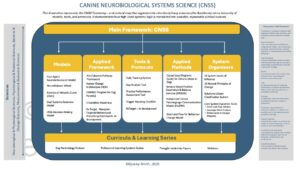
This project is applied within the Canadian professional animal care and veterinary landscape. The core objective was to replace ‘methodological inertia’—the reliance on reductionist, event-driven models—with a dynamic systems architecture.
The most critical systems thinking skills utilized were Complex Adaptive Systems (CAS) Analysis, Causal Loop Dynamics, and System Dynamics, specifically the use of Stock and Flow models. I utilized Stock and Flow logic to conceptualize ‘Neurobiological Readiness’ not as a binary state, but as a systemic stock that must be accumulated through regulation before a behavioral intervention can flow effectively. By applying Leverage Point Identification (Meadows), I determined that the most effective intervention is not the specific technique, but the systemic timing and the state of the ‘Readiness’ stock.
The project demonstrates a profound application of Interdisciplinary Integration, proving that the same architectural logic used to manage high-stakes corporate complexity can be used to resolve ‘impossible’ behavioral failures in dogs. By treating the dog-caregiver dyad as a single integrated system, the framework has achieved a 98% success rate year-over-year since 2022 across complex cases, providing a scalable, high-fidelity model for systemic change in Canadian animal welfare.
Extended Project Submission
If the registrant has sent an Extended Project Submission (video, written text), you can view it here.