

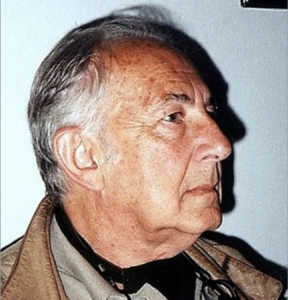
In Their Own Words
Humour
“A systems theorist is a person who spends his life trying to find a sufficiently complex map for a territory that he has already lost.”
Jung was fond of a variation of this old Central European intellectual joke. He used humour as a tool for “intellectual hygiene.” He believed that if a scientist couldn’t laugh at the limitations of their own models, they were in danger of becoming a “closed system” themselves which, in his professional view, was a state of intellectual death.
Professional Activities
In 1952, while studying at the University of Oslo (Norway), Richard Jung discovered systems science through Ludwig von Bertalanffy’s Problems of Life. This revelation provided a unified framework for his interests in biology, psychology, and sociology. Jung went on to revolutionize the field by transforming abstract social theories into rigorous, “engineered” models, bridging the gap between sociology and cybernetic precision.
His central contribution was the formalization of The Human System, a multi-level hierarchy that modeled human beings as self-regulating systems processing energy, information, and values. By applying cybernetics to Talcott Parsons’ structural-functionalism, Jung reimagined social order as a dynamic process of “steering” and feedback loops. He introduced formal rigor through “wired” schematics that were complex functional diagrams mapping the internal mechanics of human action.
Jung also humanized systems science by integrating phenomenology, arguing that intent and meaning are vital systemic variables. A proponent of cross-scale isomorphism, he maintained that the same structural laws govern everything from cells to civilizations. As a leader in the International Society for the Systems Sciences he acted as a gatekeeper for scientific depth. Jung’s legacy resides in his “analytical maps” as circuit diagrams that connect biological necessity to social aspiration, providing a comprehensive visualization of the invisible forces governing human behavior.
Contributions To Canada’s Systems Thinking Literacy
- Institutional leadership: Established the Center for Systems Research at the University of Alberta, creating a vital hub for international collaboration and academic study.
- Interdisciplinary mentorship: Integrated cybernetics, sociology, and biology to train researchers in addressing complex social and technical problems through a wholistic lens.
- Systems philosophy: Expanded the field beyond technical data to explore philosophical and ethical dimensions, influencing how human behavior and policy are conceptualized.
- Applied literacy: Improved national systems literacy by translating complex concepts for practitioners in management, planning, and community development.
- Global integration: Connected Canadian scholarship with global networks, ensuring the nation remained at the forefront of adaptive, nonlinear problem solving.
Contributions To Canadian K-12 Education
Richard Jung’s influence on Canadian K-12 education is foundational but invisible, primarily acting through the transition from linear teaching to systems thinking.
- Curriculum integration: His work in Systems Synthesis provided the theoretical framework for modern interdisciplinary curricula, moving education away from isolated subjects toward a model where students analyze how social, ecological, and technological systems interact.
- Shift to competency-based learning: Jung’s focus on General Systems mirrors Canada’s move toward Core Competencies. This prioritizes high-level cognitive skills like synthesis and critical analysis over the rote memorization of facts.
- Inquiry-based pedagogy: By championing cybernetics (the study of feedback loops), Jung’s logic supports modern inquiry-based learning, where students investigate complex big picture problems rather than linear cause-and-effect.
- Institutional influence: As a senior academic at the University of Alberta, he helped shape the intellectual climate that trained decades of Western Canadian educators and curriculum designers, embedding systems logic into the DNA of provincial school systems.
Contributions To The Global Systems Thinking Discipline
Richard Jung’s contributions to systems thinking are defined by his transformation of abstract social theories into rigorous, engineered models effectively bridging the gap between grand sociology and the mathematical precision of cybernetics. By formalizing “The Human System” as a multi-level hierarchy, Jung developed a unified schematic language that integrated biology, psychology, and culture into a single self-regulating framework. He famously evolved Talcott Parsons’ static structural-functionalism into a dynamic cybernetic process, reimagining social categories as active feedback loops focused on continuous steering and error correction.
Jung introduced a unique formal rigor through complex “wired” schematics that were functional block diagrams that mapped the internal mechanisms of human action, including inputs, throughputs, and outputs. Notably, he integrated phenomenology into systems science, arguing that subjective experiences like meaning and intent could be modeled as systemic variables. This approach humanized the field, proving that consciousness is not separate from systemic logic. Furthermore, his work emphasized cross-scale isomorphism, asserting that the structural laws governing biological cells are fundamentally similar to those governing global civilizations. As a leader within the International Society for the Systems Sciences , Jung preserved the intellectual rigor of the movement, ensuring systems thinking remained a disciplined scientific pursuit. Ultimately, his legacy lies in providing the “circuit diagrams” for human behavior, mapping the invisible threads that connect biological necessity to our highest social aspirations.
Individual Learning & Projects
Apart from the first appearance of the word Cybernetics in a book title in the late 1940’s, it wasn’t until the late 1960’s that publicly available books included the term Systems Thinking or Systems Science in the title. For the first wave of pioneers, beyond thought engagements with the authors in their Personal Learning Sources, Learner Activities were predominantly via living engagements with other people, in organised academia or independent scholars. This included 1) people studying General Systems Theory, 2) people working in the pioneer’s primary discipline, 3) people from other disciplines building interdisciplinary systems thinking skills, and 4) people wanting to stay in tune with the growing Systems Thinking thought community taking shape.
This text uses the word engagement to mean “active involvement and interest”. The term living engagements here includes spoken conversations with another person or group of people and written conversations in academic or professional organisation publications. The living engagement may have been supportive or disputational in nature.
The Projects of these pioneers could include teaching undergraduate university students, teaching and conducting research with graduate/post-graduate university students, or conducting research in learning institutes/foundations. Projects for most of them involved building information sharing networks enabling the interdisciplinary communication to happen, and several worked in diverse business, government and non-government organizations. Some pioneers chose to work as much as possible outside formal academia to conduct highly impacting projects as independent scholars.
Anchoring themselves in stable spousal relationships and home life enabled each pioneer to sustain day-to-day wellbeing as they evolved their systems thinking skills over many decades. As lifelong learners they remained exceptionally productive whether in or outside formal academia for most of their lives.
The learner activities and projects listed below are intended as starting points for deeper dives into the full network of people with whom they engaged and the projects they conducted.
Learner Activities
With whom did Richard engage more frequently in the Systems Thinking community?
Heinz von Foerster, Joseph R. Royce, R. Felix Geyer, Francisco Parra-Luna, Ludwig von Bertalanffy
With whom did Richard engage more frequently in his discipline?
Felix Geyer, Walter Buckley, Joseph R. Royce, Francisco Parra-Luna
With whom did Richard engage more frequently from other disciplines?
Heinz von Foerster, Ludwig von Bertalanffy, Gordon Pask, Ernst von Glasersfeld, Kenneth Boulding
What role did Richard’s spouse play in his engagements?
Hella Jung (nee Freise) played a vital, multifaceted supportive role particularly in enabling his academic career across multiple countries, supporting his political dissent, and preserving his intellectual legacy. Richard remained deeply committed to Czech democratic resistance and exile intellectual circles throughout the Cold War.
Hella shared and supported this commitment, maintaining ties to the Czechoslovak exile community and welcoming visiting dissidents, scholars, and emigrés into their home. She managed the stability of their home and family life, allowing him to focus on intense theoretical research, systems theory modeling, and international conferences. Following the 1989 Velvet Revolution, when Richard returned to Prague to lecture at Charles University and help re-establish modern sociological and cybernetic curricula, Hella accompanied and supported his renewed institutional ties in the Czech Republic. Following Richard’s passing in 2014, Hella was instrumental in liaising with Czech academic and oral history initiatives such as the Memory of Nations (Paměť národa) archive and the Institute of Sociology of the Czech Academy of Sciences (Sociologický ústav AV ČR) ensuring his personal testimonies, papers, and contributions to general systems theory and sociology were documented and preserved for future scholars.
Projects
Systems of Action: Machine Simulation of Social Interaction (1960’s)
The Cybernetics of Human Action (early 1970’s)
The Logic of Action (late 1970’s)
Experience and Action: Toward a Cybernetic Phenomenology (1980’s)
Systems of Experience and Systems of Action (1990’s)
Reflections on the Reconstitution of Social Sciences in Post-Totalitarian Societies (2000’s)
AI generated and reviewed with multiple brands.